For the past fifteen years, I’ve spent my days working as a graphic designer, translating complex user interfaces into something that actually makes sense. I’m the person who gets annoyed when a button is three pixels off-center or when an app demands my attention with a patronizing notification. My life is built around tiny, 5-minute habits—things like wiping my desk down before I start a design project or jotting down a quick "shutdown" list before I close my laptop. It keeps me grounded. But a few years ago, I fell into a trap that I see way too many people sliding into: the obsession with "optimizing" my sleep through a wearable sleep tracker.
I bought into the promise of the quantified self. I wanted the deep, granular sleep analytics. I wanted to see my REM cycles, my heart rate variability (HRV), and my "readiness" score. Instead, I found myself waking up at 6:30 AM, reaching for my phone with bleary eyes, and feeling a sudden surge of adrenaline—not from caffeine, but from a low score on an app. I wasn’t sleeping better. I was just stressed about being tired.
The Paradox of Sleep Analytics: Why We Feel More Anxious
When you start tracking your sleep, you aren’t just monitoring your biology; you are handing the steering wheel of your mental health to an algorithm. There is a specific term for this now: orthosomnia. It’s the perfectionist’s pursuit of the perfect night's rest, often triggered by the very device designed to help us.
As a designer, I look at these apps and I see dark patterns everywhere. They use color-coded alerts—green for "good," yellow for "warning," and that dreaded red for "low recovery." When you see that red bar, your brain immediately flags it as a failure. You aren't just "a bit tired" anymore; you are officially, mathematically, *underperforming*.
This creates a feedback loop of sleep tracking anxiety. You worry about your sleep score, which increases your cortisol, which then—you guessed it—makes your sleep quality the next night objectively worse. It’s a design flaw masquerading as a feature.
The "Data Overload" Problem
Most wearable health technology companies sell "insights," but what they often deliver is just raw, unprocessed data. They don't account for the fact that a human being isn't a server rack. If I have a bad night's sleep, I don't need a sensor to tell me. I can feel the fog in my head. I don't need to see a chart showing me exactly how much deep sleep I missed; I need to know how to adjust my afternoon so I can recover properly.
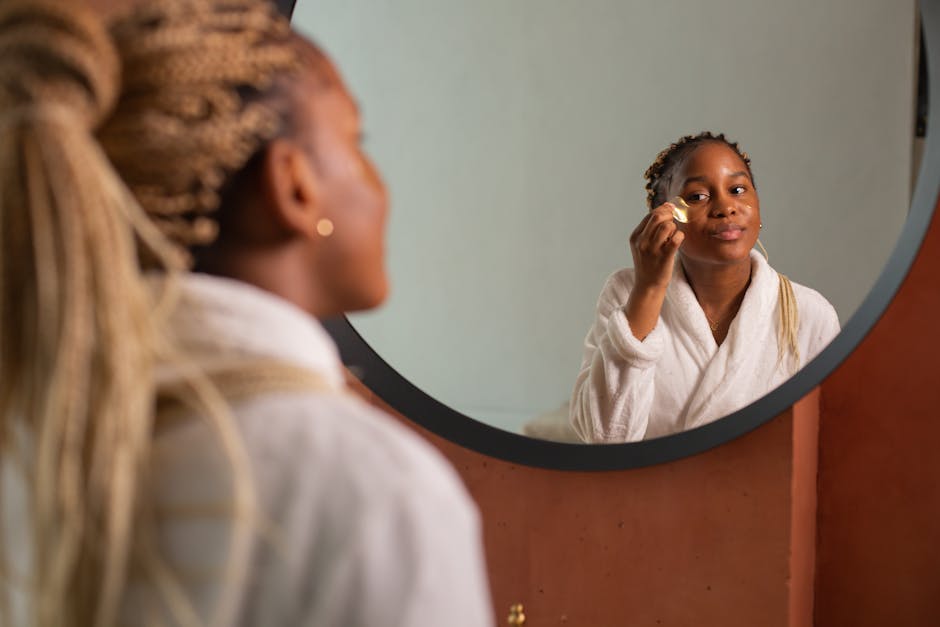
Self-Care as a Lifestyle, Not a "Detox"
I have a visceral reaction when I hear influencer-types talk about "detoxing" your life. It’s vague, it’s rarely backed by science, and it’s usually a thin veil for selling a supplement. Real self-care isn't a one-time treatment; it’s the boring, daily maintenance that keeps the system running.

If you want to move away from the anxiety of trackers, you have to stop treating sleep as a goal to hit and start https://freelogopng.com/blog/2026/05/26/modern-self-care-habits-extend-beyond-traditional-wellness-routines treating it as a byproduct of your daily life. It’s not about "fixing" your night; it’s about managing your day. If you spend 14 hours hunched over a desk without a break, your body won't magically enter "recovery mode" just because you want it to.
A More Reasonable Approach to Tracking
I’m not saying you have to throw your wearable in the trash (though, if it’s giving you anxiety, that might be a valid design choice). I’m saying you need to change your relationship with it. I spent a week testing the notification settings on my own tracker. Here is how I reconfigured my approach to make it a support tool rather than a source of stress:
- Turn off the "Scores": Most apps let you hide the summary score. Hide it. Focus on trends over weeks, not days. A single bad night doesn't matter; a three-month trend does. The "Human First" Rule: Before you look at the app, check in with yourself. How do your eyes feel? How is your energy? If you feel okay, ignore the app's "low recovery" warning. Your body knows more than the sensor on your wrist. Use Reminders for Action, Not Just Data: Don't use notifications to be told how you slept. Use them as simple, actionable reminders to start your wind-down routine.
Comparison: The Anxiety Loop vs. The Supportive Routine
Feature The Anxiety Loop (What to Avoid) The Supportive Routine (What to Try) Morning Routine Checking "Sleep Score" immediately. Checking your daily "To-Do" list (3 items). Data Focus Obsessing over daily REM/Deep sleep %. Looking at weekly consistency patterns. Decision Making Letting the app decide your workload. Listening to your physical fatigue cues. Tech Use Always-on, push-notification alerts. Periodic manual review, notifications off.Mindfulness, Meditation, and Stress Regulation
If you are struggling to sleep, a wearable sleep tracker won't save you. Real stress regulation is a skill, not a feature. I’ve found that using mindfulness apps or meditation isn't about "clearing your mind" (which is basically impossible); it’s about acknowledging the noise and choosing not to engage with it.
Think of it like design. You have a canvas, and it’s cluttered with layers. You don't delete the whole file; you just toggle the visibility of the layers that aren't necessary right now. Meditation is just toggling the "Work Stress" and "What If" layers so you can actually get some rest.
I recommend building a simple, flexible checklist rather than a rigid, hour-long routine. Rigid routines break the moment life happens—a sick kid, a late-night work email, a travel disruption. A checklist is flexible:
The 5-Minute Shutdown: Clear the desktop, jot down the three main goals for tomorrow. (Done in under 5 minutes). The Analog Gap: Put the phone in a different room at least 30 minutes before bed. This is non-negotiable. The Physiological Sigh: Practice two inhalations followed by a long, extended exhalation to reset the nervous system.Final Thoughts: You Are Not an Algorithm
The most important thing I’ve learned in fifteen years of analyzing tools and systems is that the best tool is the one that disappears into the background. If your health tech is constantly grabbing at your sleeve, it’s failing its primary job—which should be to help you live a better life, not just to show you how you’re failing at it.
Sleep consistency and recovery aren't found in a dashboard. They are found in the boring, simple choices you make throughout the day. Stop trying to "hack" your sleep. Stop looking at your wrist to tell you if you’re tired. Start trusting your own senses. When you stop obsessing over the analytics, you might find that you sleep a little better anyway.
After all, the most advanced biosensor you’ll ever own is the one you’re already inhabiting. Take care of that one first, and leave the data for when you actually need it—not when you’re trying to catch some shut-eye.